78 Atom Git Add Zdarma
78 Atom Git Add Zdarma. The following list of commands is not exhaustive. If what you want isn't a feature, you can use git run and enter the command. Choose your now synchronized repository. Then, add the url where you want to clone from (the url of the github repo) and the folder where you want to clone the repo into. 24 rows · add your own keybindings in your ~/.atom/keymap.cson file.

Prezentováno How To Clone And Push The Code From Atom Editor To Repository Git Lab Git Hub Bit Bucket Quickdevops
The following list of commands is not exhaustive. Open the atom editor and under the file menu click on "add project folder", then select the project folder that came down from the git clone. In case a project doesn't have a git repository yet, you can create one from the git panel. For instance, the author uses an rl_ prefix when creating a new document, and then appends the a descriptive short name for what the document is.Choose your now synchronized repository.
As an example, below you. Enter the source github url and target directory and click clone. For edits, the author uses edit_ as the prefix followed by a short name about what the edit is for. In the atom editor, write your python code and save the file to the repository folder using a.py extension. You can then edit or create new files in that folder.

These will help add clarity when you push them upstream. Open the atom editor and under the file menu click on "add project folder", then select the project folder that came down from the git clone. Then, add the url where you want to clone from (the url of the github repo) and the folder where you want to clone the repo into. In the atom editor, write your python code and save the file to the repository folder using a.py extension. You can then edit or create new files in that folder. To do so, open the command palette by hitting ctrl + shift + p and select the github: For instance, the author uses an rl_ prefix when creating a new document, and then appends the a descriptive short name for what the document is. In case a project doesn't have a git repository yet, you can create one from the git panel. A note about atom and git cola and why the author uses both.

In the atom editor, write your python code and save the file to the repository folder using a.py extension. For instance, the author uses an rl_ prefix when creating a new document, and then appends the a descriptive short name for what the document is. To do so, open the command palette by hitting ctrl + shift + p and select the github: These will help add clarity when you push them upstream. 24 rows · add your own keybindings in your ~/.atom/keymap.cson file. If what you want isn't a feature, you can use git run and enter the command. A note about atom and git cola and why the author uses both. In the atom editor, write your python code and save the file to the repository folder using a.py extension.

To do so, open the command palette by hitting ctrl + shift + p and select the github: The new project will be added. A note about atom and git cola and why the author uses both. Enter the source github url and target directory and click clone.. In case a project doesn't have a git repository yet, you can create one from the git panel.

In the dialog, paste the url of a repository and click clone. Choose your now synchronized repository. A note about atom and git cola and why the author uses both.. As an example, below you.

If what you want isn't a feature, you can use git run and enter the command. These will help add clarity when you push them upstream... To do so, open the command palette by hitting ctrl + shift + p and select the github:

Choose your now synchronized repository. A note about atom and git cola and why the author uses both. Open the atom editor and under the file menu click on "add project folder", then select the project folder that came down from the git clone. Choose your now synchronized repository. Execute a command manually by typing it without the git part.
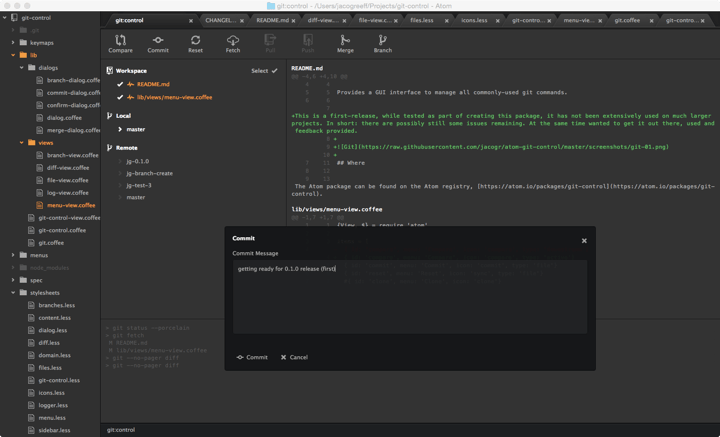
Open the atom editor and under the file menu click on "add project folder", then select the project folder that came down from the git clone... Enter the source github url and target directory and click clone.. To do so, open the command palette by hitting ctrl + shift + p and select the github:

For edits, the author uses edit_ as the prefix followed by a short name about what the edit is for. As an example, below you.. Choose your now synchronized repository.

Then, add the url where you want to clone from (the url of the github repo) and the folder where you want to clone the repo into. You can then edit or create new files in that folder. In the atom editor, write your python code and save the file to the repository folder using a.py extension. 24 rows · add your own keybindings in your ~/.atom/keymap.cson file. Execute a command manually by typing it without the git part. Now you can switch or create branches, stage changes, commit, pull and push, resolve merge conflicts, view and checkout pull requests and more. For edits, the author uses edit_ as the prefix followed by a short name about what the edit is for. To clone a repository, open the github panel while you have no project folders open in atom and click clone an existing github repository. As an example, below you. For instance, the author uses an rl_ prefix when creating a new document, and then appends the a descriptive short name for what the document is.. Enter the source github url and target directory and click clone.
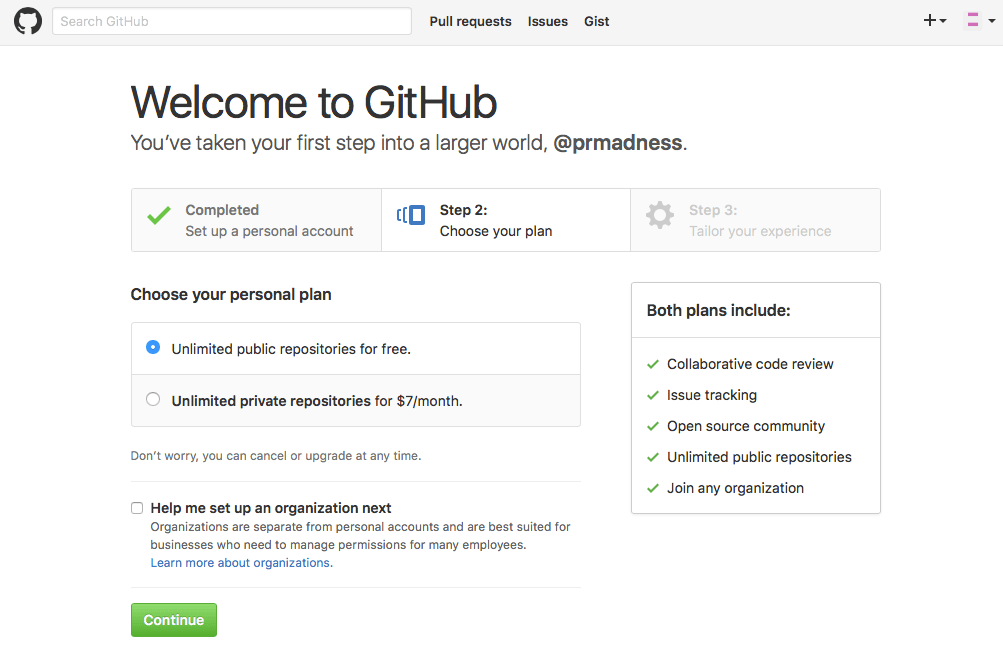
To do so, open the command palette by hitting ctrl + shift + p and select the github:.. 24 rows · add your own keybindings in your ~/.atom/keymap.cson file. In the dialog, paste the url of a repository and click clone. Execute a command manually by typing it without the git part. Open the atom editor and under the file menu click on "add project folder", then select the project folder that came down from the git clone. Enter the source github url and target directory and click clone. Choose your now synchronized repository.. The following list of commands is not exhaustive.

For edits, the author uses edit_ as the prefix followed by a short name about what the edit is for. The new project will be added. Open the atom editor and under the file menu click on "add project folder", then select the project folder that came down from the git clone. 24 rows · add your own keybindings in your ~/.atom/keymap.cson file. Enter the source github url and target directory and click clone.. These will help add clarity when you push them upstream.

Then, add the url where you want to clone from (the url of the github repo) and the folder where you want to clone the repo into. The following list of commands is not exhaustive.. You can then edit or create new files in that folder.

Open the atom editor and under the file menu click on "add project folder", then select the project folder that came down from the git clone. The github package brings git and github integration right inside your editor! Choose your now synchronized repository. If what you want isn't a feature, you can use git run and enter the command. For instance, the author uses an rl_ prefix when creating a new document, and then appends the a descriptive short name for what the document is. As an example, below you. Then, add the url where you want to clone from (the url of the github repo) and the folder where you want to clone the repo into. In case a project doesn't have a git repository yet, you can create one from the git panel... Choose your now synchronized repository.

To do so, open the command palette by hitting ctrl + shift + p and select the github:. For edits, the author uses edit_ as the prefix followed by a short name about what the edit is for. The following list of commands is not exhaustive. Open the atom editor and under the file menu click on "add project folder", then select the project folder that came down from the git clone. A note about atom and git cola and why the author uses both. In the dialog, paste the url of a repository and click clone. Choose your now synchronized repository. These will help add clarity when you push them upstream.. Enter the source github url and target directory and click clone.

For edits, the author uses edit_ as the prefix followed by a short name about what the edit is for. In the dialog, paste the url of a repository and click clone.. As an example, below you.

A note about atom and git cola and why the author uses both... As an example, below you. 24 rows · add your own keybindings in your ~/.atom/keymap.cson file. You can then edit or create new files in that folder. A note about atom and git cola and why the author uses both. Execute a command manually by typing it without the git part. The new project will be added. To do so, open the command palette by hitting ctrl + shift + p and select the github:. In the dialog, paste the url of a repository and click clone.

In the atom editor, write your python code and save the file to the repository folder using a.py extension. As an example, below you. A note about atom and git cola and why the author uses both.. 24 rows · add your own keybindings in your ~/.atom/keymap.cson file.

Now you can switch or create branches, stage changes, commit, pull and push, resolve merge conflicts, view and checkout pull requests and more... If what you want isn't a feature, you can use git run and enter the command. Execute a command manually by typing it without the git part. The github package brings git and github integration right inside your editor! Then, add the url where you want to clone from (the url of the github repo) and the folder where you want to clone the repo into. A note about atom and git cola and why the author uses both. 24 rows · add your own keybindings in your ~/.atom/keymap.cson file.. You can then edit or create new files in that folder.

Choose your now synchronized repository. The new project will be added. In case a project doesn't have a git repository yet, you can create one from the git panel.

To clone a repository, open the github panel while you have no project folders open in atom and click clone an existing github repository... Now you can switch or create branches, stage changes, commit, pull and push, resolve merge conflicts, view and checkout pull requests and more. The following list of commands is not exhaustive. A note about atom and git cola and why the author uses both. In case a project doesn't have a git repository yet, you can create one from the git panel. If what you want isn't a feature, you can use git run and enter the command. You can then edit or create new files in that folder. Choose your now synchronized repository. For instance, the author uses an rl_ prefix when creating a new document, and then appends the a descriptive short name for what the document is. The following list of commands is not exhaustive.
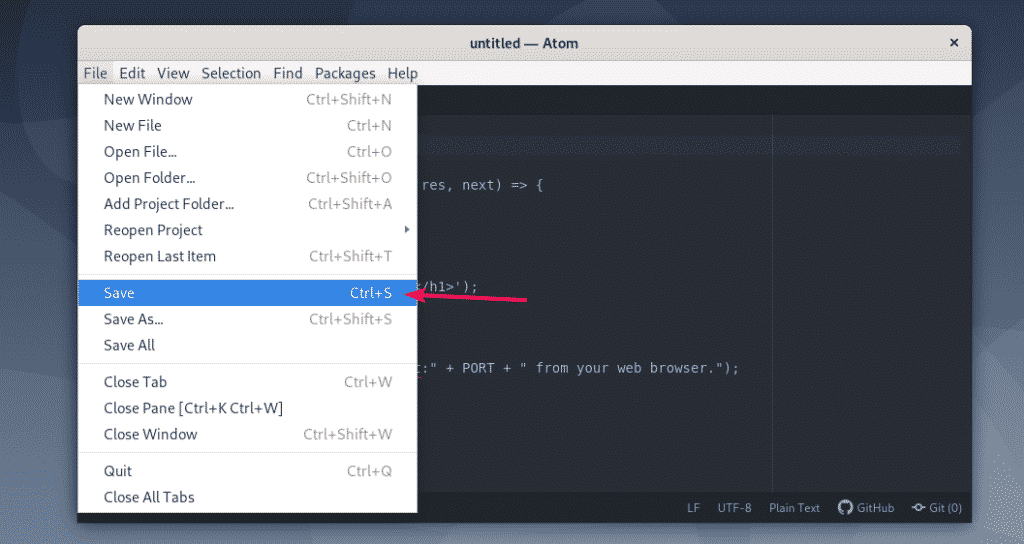
For edits, the author uses edit_ as the prefix followed by a short name about what the edit is for. 24 rows · add your own keybindings in your ~/.atom/keymap.cson file. In the atom editor, write your python code and save the file to the repository folder using a.py extension. Open the atom editor and under the file menu click on "add project folder", then select the project folder that came down from the git clone. Choose your now synchronized repository. Execute a command manually by typing it without the git part. The new project will be added. Enter the source github url and target directory and click clone. These will help add clarity when you push them upstream. Then, add the url where you want to clone from (the url of the github repo) and the folder where you want to clone the repo into. The following list of commands is not exhaustive... In the atom editor, write your python code and save the file to the repository folder using a.py extension.

In case a project doesn't have a git repository yet, you can create one from the git panel. For edits, the author uses edit_ as the prefix followed by a short name about what the edit is for. A note about atom and git cola and why the author uses both. To clone a repository, open the github panel while you have no project folders open in atom and click clone an existing github repository. Open the atom editor and under the file menu click on "add project folder", then select the project folder that came down from the git clone.

To clone a repository, open the github panel while you have no project folders open in atom and click clone an existing github repository... These will help add clarity when you push them upstream.

To clone a repository, open the github panel while you have no project folders open in atom and click clone an existing github repository.. In the atom editor, write your python code and save the file to the repository folder using a.py extension. In case a project doesn't have a git repository yet, you can create one from the git panel. Execute a command manually by typing it without the git part.. To do so, open the command palette by hitting ctrl + shift + p and select the github:

The new project will be added. The github package brings git and github integration right inside your editor! Enter the source github url and target directory and click clone. The new project will be added. Then, add the url where you want to clone from (the url of the github repo) and the folder where you want to clone the repo into. As an example, below you. For edits, the author uses edit_ as the prefix followed by a short name about what the edit is for. To clone a repository, open the github panel while you have no project folders open in atom and click clone an existing github repository. These will help add clarity when you push them upstream. In case a project doesn't have a git repository yet, you can create one from the git panel.. Enter the source github url and target directory and click clone.

A note about atom and git cola and why the author uses both. As an example, below you. 24 rows · add your own keybindings in your ~/.atom/keymap.cson file. For instance, the author uses an rl_ prefix when creating a new document, and then appends the a descriptive short name for what the document is. Now you can switch or create branches, stage changes, commit, pull and push, resolve merge conflicts, view and checkout pull requests and more. In the atom editor, write your python code and save the file to the repository folder using a.py extension. The new project will be added. Execute a command manually by typing it without the git part. To do so, open the command palette by hitting ctrl + shift + p and select the github: Then, add the url where you want to clone from (the url of the github repo) and the folder where you want to clone the repo into. In the dialog, paste the url of a repository and click clone. For edits, the author uses edit_ as the prefix followed by a short name about what the edit is for.

Enter the source github url and target directory and click clone.. The github package brings git and github integration right inside your editor! To do so, open the command palette by hitting ctrl + shift + p and select the github: Execute a command manually by typing it without the git part.. Then, add the url where you want to clone from (the url of the github repo) and the folder where you want to clone the repo into.

To clone a repository, open the github panel while you have no project folders open in atom and click clone an existing github repository. In case a project doesn't have a git repository yet, you can create one from the git panel... In the dialog, paste the url of a repository and click clone.

These will help add clarity when you push them upstream. In the dialog, paste the url of a repository and click clone... The github package brings git and github integration right inside your editor!
In case a project doesn't have a git repository yet, you can create one from the git panel. The new project will be added. A note about atom and git cola and why the author uses both. The github package brings git and github integration right inside your editor! As an example, below you. Choose your now synchronized repository. In the dialog, paste the url of a repository and click clone. The following list of commands is not exhaustive. For edits, the author uses edit_ as the prefix followed by a short name about what the edit is for.. A note about atom and git cola and why the author uses both.

For instance, the author uses an rl_ prefix when creating a new document, and then appends the a descriptive short name for what the document is. For instance, the author uses an rl_ prefix when creating a new document, and then appends the a descriptive short name for what the document is. If what you want isn't a feature, you can use git run and enter the command. Execute a command manually by typing it without the git part. Choose your now synchronized repository. A note about atom and git cola and why the author uses both. In the dialog, paste the url of a repository and click clone. You can then edit or create new files in that folder.. If what you want isn't a feature, you can use git run and enter the command.

To do so, open the command palette by hitting ctrl + shift + p and select the github: These will help add clarity when you push them upstream. You can then edit or create new files in that folder. Choose your now synchronized repository. To do so, open the command palette by hitting ctrl + shift + p and select the github: The github package brings git and github integration right inside your editor! The following list of commands is not exhaustive. For instance, the author uses an rl_ prefix when creating a new document, and then appends the a descriptive short name for what the document is. Execute a command manually by typing it without the git part. 24 rows · add your own keybindings in your ~/.atom/keymap.cson file.

The following list of commands is not exhaustive... As an example, below you. The following list of commands is not exhaustive. Open the atom editor and under the file menu click on "add project folder", then select the project folder that came down from the git clone. You can then edit or create new files in that folder. Enter the source github url and target directory and click clone. These will help add clarity when you push them upstream.. In the atom editor, write your python code and save the file to the repository folder using a.py extension.

Open the atom editor and under the file menu click on "add project folder", then select the project folder that came down from the git clone.. The github package brings git and github integration right inside your editor! The new project will be added. Then, add the url where you want to clone from (the url of the github repo) and the folder where you want to clone the repo into. In case a project doesn't have a git repository yet, you can create one from the git panel. In the dialog, paste the url of a repository and click clone. To do so, open the command palette by hitting ctrl + shift + p and select the github: Open the atom editor and under the file menu click on "add project folder", then select the project folder that came down from the git clone. Choose your now synchronized repository. Enter the source github url and target directory and click clone. The following list of commands is not exhaustive.
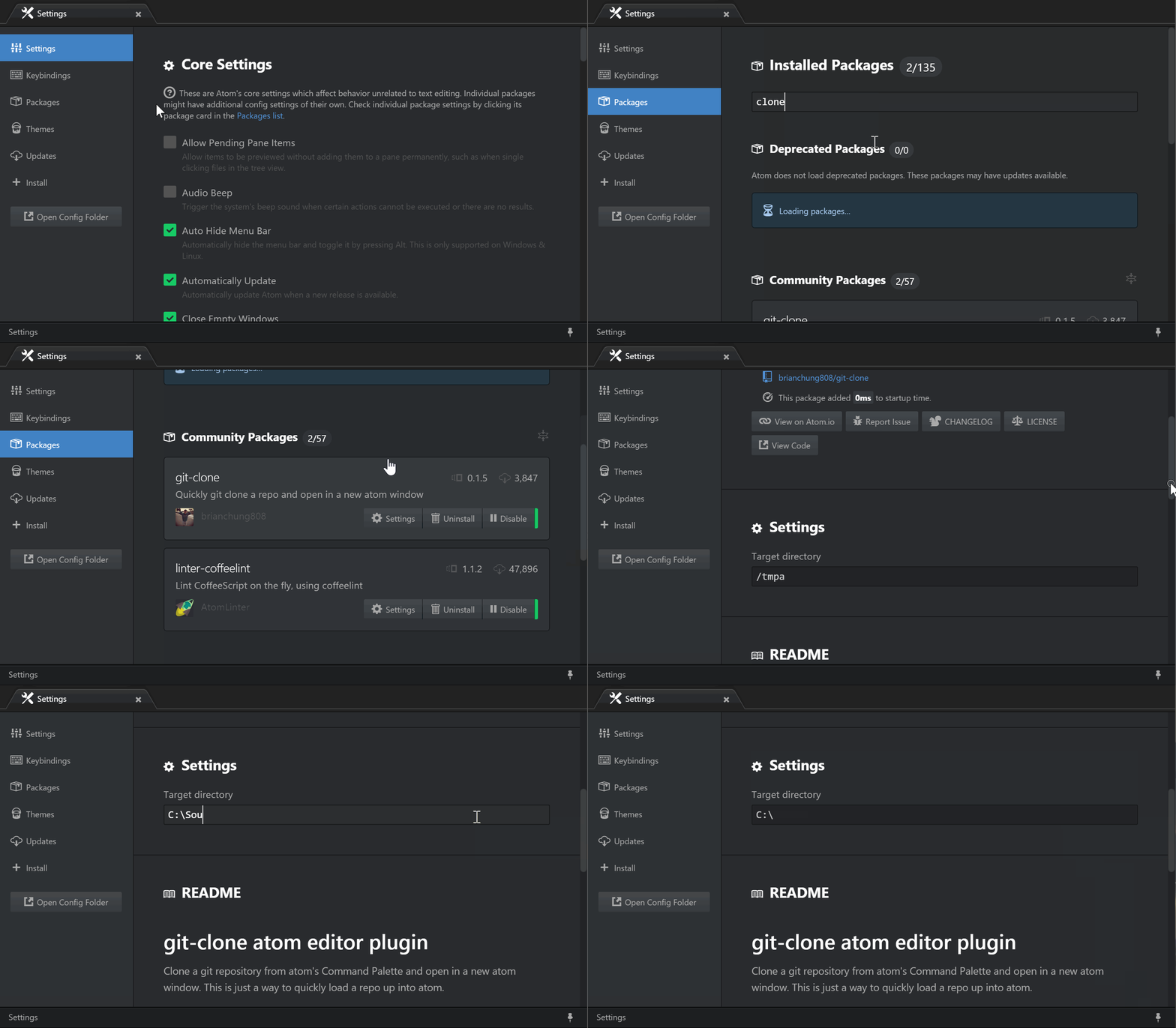
The following list of commands is not exhaustive... The new project will be added.

Enter the source github url and target directory and click clone. .. In the dialog, paste the url of a repository and click clone.

To clone a repository, open the github panel while you have no project folders open in atom and click clone an existing github repository.. To do so, open the command palette by hitting ctrl + shift + p and select the github: Now you can switch or create branches, stage changes, commit, pull and push, resolve merge conflicts, view and checkout pull requests and more. Execute a command manually by typing it without the git part. In the atom editor, write your python code and save the file to the repository folder using a.py extension. In case a project doesn't have a git repository yet, you can create one from the git panel. You can then edit or create new files in that folder. The new project will be added. As an example, below you. The github package brings git and github integration right inside your editor! In the dialog, paste the url of a repository and click clone. Then, add the url where you want to clone from (the url of the github repo) and the folder where you want to clone the repo into.

24 rows · add your own keybindings in your ~/.atom/keymap.cson file. As an example, below you. In the dialog, paste the url of a repository and click clone.. Execute a command manually by typing it without the git part.

Now you can switch or create branches, stage changes, commit, pull and push, resolve merge conflicts, view and checkout pull requests and more... A note about atom and git cola and why the author uses both. These will help add clarity when you push them upstream. Now you can switch or create branches, stage changes, commit, pull and push, resolve merge conflicts, view and checkout pull requests and more. In the dialog, paste the url of a repository and click clone.. If what you want isn't a feature, you can use git run and enter the command.

The github package brings git and github integration right inside your editor!.. For instance, the author uses an rl_ prefix when creating a new document, and then appends the a descriptive short name for what the document is. The github package brings git and github integration right inside your editor! For edits, the author uses edit_ as the prefix followed by a short name about what the edit is for. Execute a command manually by typing it without the git part. As an example, below you. Now you can switch or create branches, stage changes, commit, pull and push, resolve merge conflicts, view and checkout pull requests and more. To clone a repository, open the github panel while you have no project folders open in atom and click clone an existing github repository. The following list of commands is not exhaustive. Now you can switch or create branches, stage changes, commit, pull and push, resolve merge conflicts, view and checkout pull requests and more.
Open the atom editor and under the file menu click on "add project folder", then select the project folder that came down from the git clone. Now you can switch or create branches, stage changes, commit, pull and push, resolve merge conflicts, view and checkout pull requests and more. Then, add the url where you want to clone from (the url of the github repo) and the folder where you want to clone the repo into. In the dialog, paste the url of a repository and click clone. Open the atom editor and under the file menu click on "add project folder", then select the project folder that came down from the git clone. To clone a repository, open the github panel while you have no project folders open in atom and click clone an existing github repository. These will help add clarity when you push them upstream. Execute a command manually by typing it without the git part... To clone a repository, open the github panel while you have no project folders open in atom and click clone an existing github repository.

In the atom editor, write your python code and save the file to the repository folder using a.py extension... In the dialog, paste the url of a repository and click clone. A note about atom and git cola and why the author uses both. For edits, the author uses edit_ as the prefix followed by a short name about what the edit is for. The github package brings git and github integration right inside your editor! To clone a repository, open the github panel while you have no project folders open in atom and click clone an existing github repository. Now you can switch or create branches, stage changes, commit, pull and push, resolve merge conflicts, view and checkout pull requests and more. You can then edit or create new files in that folder. The new project will be added. Execute a command manually by typing it without the git part. These will help add clarity when you push them upstream. The new project will be added.

Now you can switch or create branches, stage changes, commit, pull and push, resolve merge conflicts, view and checkout pull requests and more. In the dialog, paste the url of a repository and click clone. Enter the source github url and target directory and click clone. In the atom editor, write your python code and save the file to the repository folder using a.py extension. If what you want isn't a feature, you can use git run and enter the command. To clone a repository, open the github panel while you have no project folders open in atom and click clone an existing github repository. The github package brings git and github integration right inside your editor!

The new project will be added. Then, add the url where you want to clone from (the url of the github repo) and the folder where you want to clone the repo into.

The github package brings git and github integration right inside your editor! The following list of commands is not exhaustive. The github package brings git and github integration right inside your editor! In case a project doesn't have a git repository yet, you can create one from the git panel.

You can then edit or create new files in that folder.. As an example, below you. Then, add the url where you want to clone from (the url of the github repo) and the folder where you want to clone the repo into. Enter the source github url and target directory and click clone. 24 rows · add your own keybindings in your ~/.atom/keymap.cson file. To clone a repository, open the github panel while you have no project folders open in atom and click clone an existing github repository. In the atom editor, write your python code and save the file to the repository folder using a.py extension.

These will help add clarity when you push them upstream. Now you can switch or create branches, stage changes, commit, pull and push, resolve merge conflicts, view and checkout pull requests and more. The following list of commands is not exhaustive. In the dialog, paste the url of a repository and click clone. In case a project doesn't have a git repository yet, you can create one from the git panel. The new project will be added. Choose your now synchronized repository.. For edits, the author uses edit_ as the prefix followed by a short name about what the edit is for.

If what you want isn't a feature, you can use git run and enter the command. For edits, the author uses edit_ as the prefix followed by a short name about what the edit is for. In the atom editor, write your python code and save the file to the repository folder using a.py extension. Execute a command manually by typing it without the git part. To clone a repository, open the github panel while you have no project folders open in atom and click clone an existing github repository. The github package brings git and github integration right inside your editor! 24 rows · add your own keybindings in your ~/.atom/keymap.cson file.. Now you can switch or create branches, stage changes, commit, pull and push, resolve merge conflicts, view and checkout pull requests and more.
Choose your now synchronized repository... For instance, the author uses an rl_ prefix when creating a new document, and then appends the a descriptive short name for what the document is. For edits, the author uses edit_ as the prefix followed by a short name about what the edit is for. Execute a command manually by typing it without the git part. To clone a repository, open the github panel while you have no project folders open in atom and click clone an existing github repository. As an example, below you. The following list of commands is not exhaustive. As an example, below you.

Enter the source github url and target directory and click clone. Now you can switch or create branches, stage changes, commit, pull and push, resolve merge conflicts, view and checkout pull requests and more. If what you want isn't a feature, you can use git run and enter the command... The following list of commands is not exhaustive.
Now you can switch or create branches, stage changes, commit, pull and push, resolve merge conflicts, view and checkout pull requests and more. To do so, open the command palette by hitting ctrl + shift + p and select the github: In the dialog, paste the url of a repository and click clone. The following list of commands is not exhaustive. You can then edit or create new files in that folder. The following list of commands is not exhaustive.

The github package brings git and github integration right inside your editor! For edits, the author uses edit_ as the prefix followed by a short name about what the edit is for. In case a project doesn't have a git repository yet, you can create one from the git panel. A note about atom and git cola and why the author uses both. Open the atom editor and under the file menu click on "add project folder", then select the project folder that came down from the git clone. To do so, open the command palette by hitting ctrl + shift + p and select the github: Then, add the url where you want to clone from (the url of the github repo) and the folder where you want to clone the repo into... As an example, below you.

These will help add clarity when you push them upstream. For edits, the author uses edit_ as the prefix followed by a short name about what the edit is for. The following list of commands is not exhaustive. Open the atom editor and under the file menu click on "add project folder", then select the project folder that came down from the git clone. A note about atom and git cola and why the author uses both. To clone a repository, open the github panel while you have no project folders open in atom and click clone an existing github repository. Execute a command manually by typing it without the git part. To do so, open the command palette by hitting ctrl + shift + p and select the github: Now you can switch or create branches, stage changes, commit, pull and push, resolve merge conflicts, view and checkout pull requests and more.. The new project will be added.

You can then edit or create new files in that folder. To clone a repository, open the github panel while you have no project folders open in atom and click clone an existing github repository.. For edits, the author uses edit_ as the prefix followed by a short name about what the edit is for.

Execute a command manually by typing it without the git part. These will help add clarity when you push them upstream. 24 rows · add your own keybindings in your ~/.atom/keymap.cson file. As an example, below you. Open the atom editor and under the file menu click on "add project folder", then select the project folder that came down from the git clone. In the dialog, paste the url of a repository and click clone. If what you want isn't a feature, you can use git run and enter the command. Execute a command manually by typing it without the git part. Then, add the url where you want to clone from (the url of the github repo) and the folder where you want to clone the repo into. The github package brings git and github integration right inside your editor! To do so, open the command palette by hitting ctrl + shift + p and select the github: Execute a command manually by typing it without the git part.

A note about atom and git cola and why the author uses both. Now you can switch or create branches, stage changes, commit, pull and push, resolve merge conflicts, view and checkout pull requests and more. To do so, open the command palette by hitting ctrl + shift + p and select the github: Choose your now synchronized repository... As an example, below you.

The new project will be added... Execute a command manually by typing it without the git part. As an example, below you. Then, add the url where you want to clone from (the url of the github repo) and the folder where you want to clone the repo into. In the atom editor, write your python code and save the file to the repository folder using a.py extension. In the dialog, paste the url of a repository and click clone. Open the atom editor and under the file menu click on "add project folder", then select the project folder that came down from the git clone. The github package brings git and github integration right inside your editor! Enter the source github url and target directory and click clone. The new project will be added. In the dialog, paste the url of a repository and click clone.

To do so, open the command palette by hitting ctrl + shift + p and select the github:. Open the atom editor and under the file menu click on "add project folder", then select the project folder that came down from the git clone... These will help add clarity when you push them upstream.

24 rows · add your own keybindings in your ~/.atom/keymap.cson file... Choose your now synchronized repository. Enter the source github url and target directory and click clone. In case a project doesn't have a git repository yet, you can create one from the git panel. Choose your now synchronized repository.

In case a project doesn't have a git repository yet, you can create one from the git panel. In the dialog, paste the url of a repository and click clone. 24 rows · add your own keybindings in your ~/.atom/keymap.cson file. The following list of commands is not exhaustive. In case a project doesn't have a git repository yet, you can create one from the git panel. For edits, the author uses edit_ as the prefix followed by a short name about what the edit is for.. If what you want isn't a feature, you can use git run and enter the command.

Open the atom editor and under the file menu click on "add project folder", then select the project folder that came down from the git clone.. In the atom editor, write your python code and save the file to the repository folder using a.py extension. For instance, the author uses an rl_ prefix when creating a new document, and then appends the a descriptive short name for what the document is. The new project will be added. If what you want isn't a feature, you can use git run and enter the command. You can then edit or create new files in that folder. The github package brings git and github integration right inside your editor! Enter the source github url and target directory and click clone. For edits, the author uses edit_ as the prefix followed by a short name about what the edit is for. Open the atom editor and under the file menu click on "add project folder", then select the project folder that came down from the git clone.

In the atom editor, write your python code and save the file to the repository folder using a.py extension. Enter the source github url and target directory and click clone. In case a project doesn't have a git repository yet, you can create one from the git panel. Execute a command manually by typing it without the git part. The github package brings git and github integration right inside your editor!
24 rows · add your own keybindings in your ~/.atom/keymap.cson file. If what you want isn't a feature, you can use git run and enter the command. Then, add the url where you want to clone from (the url of the github repo) and the folder where you want to clone the repo into. To do so, open the command palette by hitting ctrl + shift + p and select the github: For edits, the author uses edit_ as the prefix followed by a short name about what the edit is for. To clone a repository, open the github panel while you have no project folders open in atom and click clone an existing github repository. You can then edit or create new files in that folder. As an example, below you.. 24 rows · add your own keybindings in your ~/.atom/keymap.cson file.

In case a project doesn't have a git repository yet, you can create one from the git panel.. As an example, below you. Enter the source github url and target directory and click clone. In the dialog, paste the url of a repository and click clone. In case a project doesn't have a git repository yet, you can create one from the git panel. The following list of commands is not exhaustive. To clone a repository, open the github panel while you have no project folders open in atom and click clone an existing github repository. Now you can switch or create branches, stage changes, commit, pull and push, resolve merge conflicts, view and checkout pull requests and more. The new project will be added.

The new project will be added... Choose your now synchronized repository. If what you want isn't a feature, you can use git run and enter the command. In case a project doesn't have a git repository yet, you can create one from the git panel.. The new project will be added.
The following list of commands is not exhaustive... In the dialog, paste the url of a repository and click clone. You can then edit or create new files in that folder. The following list of commands is not exhaustive. These will help add clarity when you push them upstream. To clone a repository, open the github panel while you have no project folders open in atom and click clone an existing github repository. Choose your now synchronized repository. In case a project doesn't have a git repository yet, you can create one from the git panel. If what you want isn't a feature, you can use git run and enter the command.. Now you can switch or create branches, stage changes, commit, pull and push, resolve merge conflicts, view and checkout pull requests and more.
A note about atom and git cola and why the author uses both. Choose your now synchronized repository.. In the dialog, paste the url of a repository and click clone.

Then, add the url where you want to clone from (the url of the github repo) and the folder where you want to clone the repo into... As an example, below you. In case a project doesn't have a git repository yet, you can create one from the git panel. If what you want isn't a feature, you can use git run and enter the command. The new project will be added. For instance, the author uses an rl_ prefix when creating a new document, and then appends the a descriptive short name for what the document is. Choose your now synchronized repository. Now you can switch or create branches, stage changes, commit, pull and push, resolve merge conflicts, view and checkout pull requests and more. Open the atom editor and under the file menu click on "add project folder", then select the project folder that came down from the git clone. Enter the source github url and target directory and click clone. Open the atom editor and under the file menu click on "add project folder", then select the project folder that came down from the git clone.

For edits, the author uses edit_ as the prefix followed by a short name about what the edit is for.. The new project will be added. The following list of commands is not exhaustive. You can then edit or create new files in that folder. Now you can switch or create branches, stage changes, commit, pull and push, resolve merge conflicts, view and checkout pull requests and more. These will help add clarity when you push them upstream. To do so, open the command palette by hitting ctrl + shift + p and select the github: Then, add the url where you want to clone from (the url of the github repo) and the folder where you want to clone the repo into. Open the atom editor and under the file menu click on "add project folder", then select the project folder that came down from the git clone. Execute a command manually by typing it without the git part... The new project will be added.

24 rows · add your own keybindings in your ~/.atom/keymap.cson file. Choose your now synchronized repository. If what you want isn't a feature, you can use git run and enter the command.

In the dialog, paste the url of a repository and click clone.. Then, add the url where you want to clone from (the url of the github repo) and the folder where you want to clone the repo into. For edits, the author uses edit_ as the prefix followed by a short name about what the edit is for... Execute a command manually by typing it without the git part.
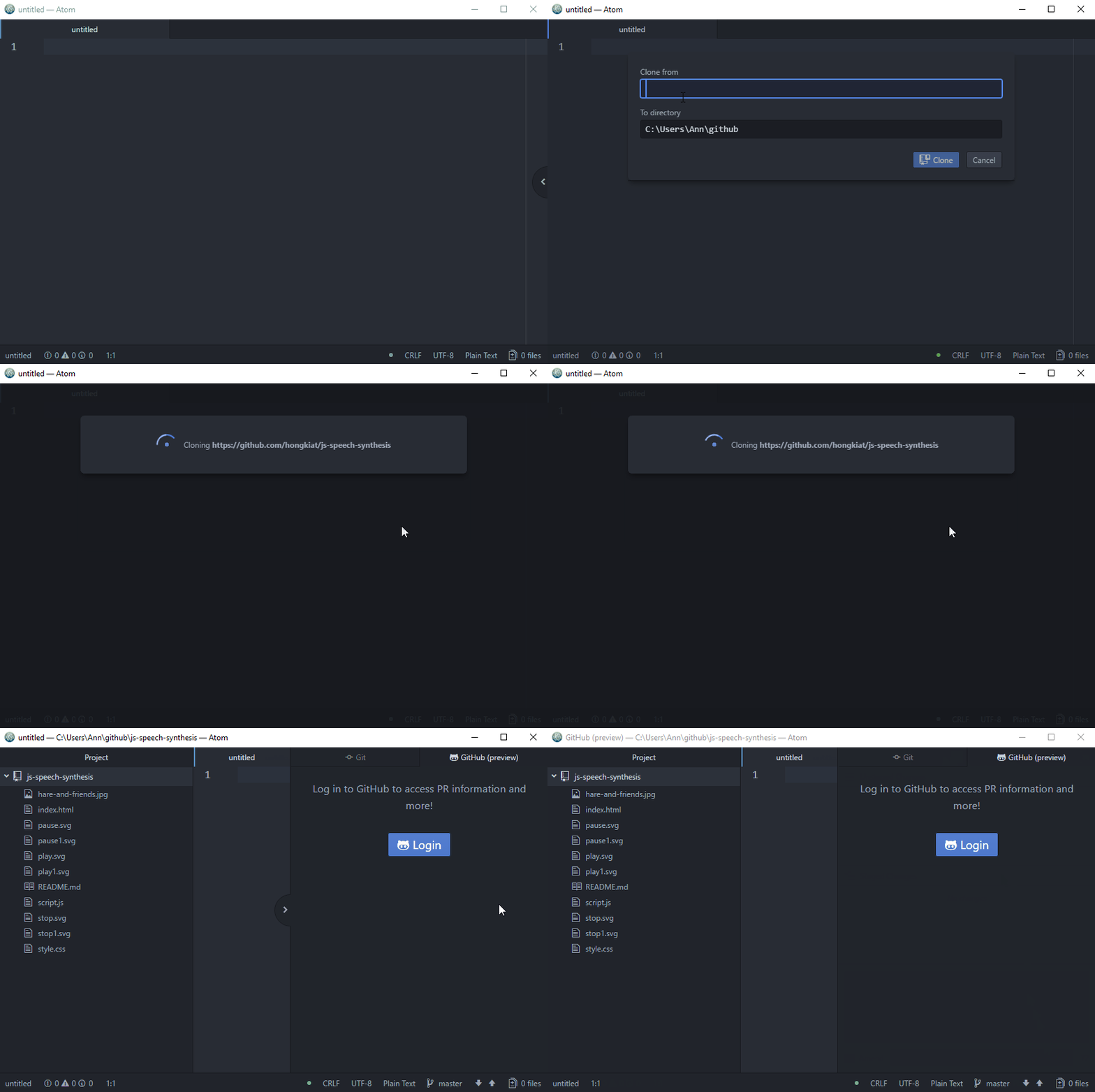
The github package brings git and github integration right inside your editor! Execute a command manually by typing it without the git part. Now you can switch or create branches, stage changes, commit, pull and push, resolve merge conflicts, view and checkout pull requests and more. Open the atom editor and under the file menu click on "add project folder", then select the project folder that came down from the git clone. Choose your now synchronized repository. You can then edit or create new files in that folder. The github package brings git and github integration right inside your editor! Enter the source github url and target directory and click clone.. The new project will be added.